One table. Many ways to play. Find the kind of evening you want to share—from a friendly rivalry to an adventure you create together.
Choose the experience first. Solve a problem together, challenge each other, work on your own puzzle, or step into a story. The six paths below show what each choice means at the table, with examples for two people.
A rules-based introduction · How we put this guide together

Choose the evening you want
Pick a path that sounds like your evening. Compare the “Before you choose” note together, then jump to the explanation.

Solve it together
Pandemic
Before you chooseLeave room for both people to decide.
Explore this style 02Limited-information co-op
Connect the clues
Codenames: Duet · Sky Team
Before you chooseSome things must remain unsaid.
Explore this style 03Direct confrontation
Challenge each other
Backgammon
Before you chooseSetbacks are part of the contest.
Explore this style 04Shared opportunities
Build and compete
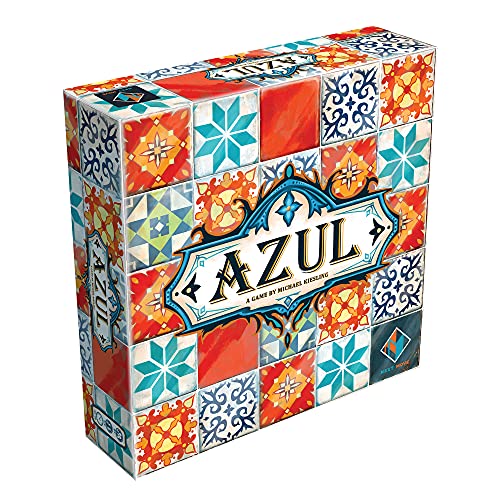
Azul
Before you chooseYour choice can take away mine.
Explore this style 05Parallel play
Puzzle side by side
Rolling Realms
Before you chooseExpect fewer shared decisions.
Explore this style 06Tabletop roleplaying
Create a story
D&D · Ironsworn
Before you chooseDecide who guides the adventure.
Explore this styleTwo questions help you read any game box: What are we trying to achieve? How do our choices affect each other? Co-op and competitive describe your goals. Direct and indirect interaction describe how you influence one another. RPGs are a form of play and can also be cooperative.
01 / A shared goal
Work together: two kinds of co-op
In a cooperative board game, the group works toward a shared victory and can lose together. That removes the need to beat the person across the table. It does not remove difficult decisions or tense moments.
Open discussion: “Let’s work this out”
You compare options, suggest a plan, and use your different abilities toward the same goal.
Pandemic, the base game, is a concrete example for two to four players. You coordinate a disease-control team. Its rules encourage advice and discussion while leaving the final decision to the person taking the turn. Publisher overview · Rulebook, page 3
This style is worth exploring when discussing the puzzle is part of the attraction. The possible snag is that one person sees a plan and begins directing everyone else. Our suggestion: let the active player explain their idea before offering alternatives. Helping should still leave them a turn to play.
Limited information: “I know something you don’t”
Some co-ops make communication itself the puzzle. You might hold information your partner cannot see, or be allowed to give only a particular kind of clue.
Codenames: Duet uses different views of a key card and clues consisting of one word and a number. You are finding agents together, but cannot simply explain every answer. The current 2025 edition supports two or more players; “Duet” identifies the cooperative game discussed here. CGE’s description
Sky Team is exclusively for two players, acting as pilot and copilot. You share the task of landing a plane, but assign your dice silently. Cooperation can involve close attention rather than continuous conversation. Publisher overview
Check the communication rules before choosing this style for a chatty evening. Being unable to say the obvious thing is part of the challenge. Also distinguish a limit on turns from an actual countdown timer: they create different kinds of pressure.
02 / A friendly rivalry
Compete: three ways to play against each other
“Competitive” alone tells you very little about the evening. You could be knocking each other backward, choosing from the same supply, or solving almost independent puzzles.
Direct confrontation: “Your move changes my position”
Your decisions can directly disrupt what the other player has established.
In Backgammon, landing on a point occupied by one opposing checker sends that checker to the bar. Its owner must bring it back into play before moving other checkers. That is a tangible setback caused by another player’s move. Backgammon rules: hitting and entering
Explore this style if you like responding to an opponent, protecting a position, and spotting an opening. Before playing, agree that disruption is part of the game. If either person dislikes having progress undone, choose a different interaction style for that evening.
You can try Backgammon here with two players on the same device, or start with our setup and rules guide.
Indirect competition: “We both need those tiles”
You develop your own position, but your choices change what remains available to everyone else. The interaction comes through a shared supply, spaces, or opportunities.
In Azul’s base game, players take tiles from shared factory displays or the center. Taking a color changes the next player’s options; tiles that cannot be placed can bring penalties. You have separate boards, but you are not playing separate games. The base game supports two to four players. Official rules, pages 2–5
“Indirect” does not mean gentle. Deliberately taking the tiles someone needs may feel quite pointed. Ask whether you enjoy adapting to a changing offer, rather than assuming a peaceful theme guarantees a peaceful contest.
Parallel play: “Same challenge, different solutions”
Here, much of the decision-making happens on your own playing area. You still compare results, but influencing each other is less central to the activity.
Rolling Realms illustrates the idea: everyone uses the same two dice results on their own realm cards to generate resources and score stars. The box supports one to six players. It is a roll-and-write game—roll dice, then record choices on a personal playing surface. Publisher description
This is a useful direction if you want company while concentrating on your own puzzle. It may feel less engaging if your favorite part of gaming is a constant back-and-forth. Separate boards alone do not prove low interaction, and simultaneous decisions do not necessarily mean a speed contest.
Why Carcassonne crosses the boundaries
Carcassonne makes the distinction especially visible. Everyone builds the same landscape, but each player earns their own points. Separate occupied features can later join. At scoring, the player with the most meeples on the feature gets its points; tied leaders each receive the full amount. Official basic-rule examples, PDF pages 8–9


In a completed city with one blue meeple and one red meeple, both players score the full value. With two blue meeples and one red, only blue scores. These are positions reached by connecting previously separate occupied features; you cannot simply add a meeple to an already occupied city.
The shared landscape is therefore not proof of cooperation. The same rules allow mutual benefit and rivalry. The linked publisher demo uses reduced components; this example concerns the majority rule, not its component count.
03 / A shared story
Create a story: board games and RPGs
A tabletop roleplaying game—RPG or TTRPG—asks you to make choices as a fictional character. You describe an action, and the game’s rules help determine what happens when the outcome is uncertain. An adventure may finish in one session, or continue as a campaign across several meetings.
The appeal is having a say in the unfolding situation: approach the guard, find another entrance, make a promise, or risk a fight. You can simply describe what your character does; a theatrical voice is optional.
- 01 · SituationThe bridge is guarded.
Someone establishes what your character encounters.
- 02 · Choice“I try to negotiate.”
You describe an approach. Use the game’s rules when needed.
- 03 · ConsequenceThe guard asks a favor.
The outcome creates your next decision.
An illustrative scene, not a rule or a guaranteed outcome. The story continues from here.
With a game master
In Dungeons & Dragons, a game master, called the Dungeon Master or DM, describes situations, portrays other characters, and adjudicates the rules. The other players control adventurers. The DM runs the challenges but is not a rival trying to win an ordinary two-sided contest. D&D’s introductory rules
For two people, check the format carefully. Those rules recommend one DM and three to six adventurer players. A two-person adventure needs suitable support; the familiarity of the D&D name does not make every starter adventure a ready-made game for two.
Without a fixed game master
If both of you want to play protagonists, look for a system that explicitly supports cooperative play without a GM.
Ironsworn offers that option: you and at least one other player can pursue quests together without a game master. Rules and oracle prompts help resolve uncertainty and inspire what happens next. It also supports solo and guided play, and its digital edition is free. Ironsworn’s play modes and download
That makes it a relevant format to investigate for two people. It still involves learning a system and interpreting the story together. “No GM” does not mean “no rules” or “no creative effort.”
A board game with roleplaying elements
You can also explore characters and an ongoing story through a more structured board game. Gloomhaven’s second-edition board game combines a cooperative campaign, tactical combat, and branching narrative for one to four players, without a GM. Publisher description
It illustrates the distinction rather than serving as a default beginner recommendation: a campaign board game offers defined systems for progressing through scenarios, while a tabletop RPG can give participants more responsibility for creating the situation itself. Character levels or a fantasy setting alone do not make the two interchangeable.
Before committing to either format, discuss how much preparation you want, who enjoys guiding a story, and whether you want a single adventure or repeat sessions.
04 / Your first evening
Plan your first game night
Use this short plan once you have chosen a style. These are our practical suggestions, not measured playtimes or a promise that a particular game will suit everyone.
- Pick one shared priority. Finish the sentence: “Tonight, we want to…” Use the six paths above. You are choosing an evening, not a permanent gamer identity.
- Check the exact game and player count. Base games, expansions, editions, and similarly named versions can differ. Confirm whether “two players” means two people on equal terms or a particular variant.
- Budget for the whole session. Include setup, learning, play, and packing away. Treat a printed duration as an estimate; leave room for your first explanation and rules checks.
- Make the first commitment small. Use the introductory scenario or beginner setup where the rules provide one. For an RPG, agree on one starting situation and a stopping point before committing to a campaign.
- Explain the goal before the details. Show what a turn or scene looks like, how it moves the game forward, and how the session ends. Keep the rulebook available instead of trying to memorize everything.
- Choose the next session from what happened. Ask each other: “Did we want more discussion, more independence, or more back-and-forth?” That answer is more useful than whether the first game was a win.
For a competitive game, talk about blocking and setbacks beforehand. For co-op, give both people room to choose. For an RPG, agree on the tone of the story and subjects you would rather leave out.
05 / The small print, explained
Quick answers for beginners
Is co-op easier than competitive play?
The label does not tell you. It describes your relationship to the goal. Check the actual rules, information restrictions, and introductory options. A shared loss can still be challenging; a competitive game can have a very small ruleset.
What are team games, bluffing, and semi-cooperative games?
Team games combine cooperation within a team with competition between teams. Bluffing involves misleading others about information or intentions; negotiation involves making agreements. Both describe interaction rather than a player count or a victory condition.
Semi-cooperative games mix shared concerns with individual interests or conditions. Check exactly who can win and lose. These labels alone do not establish that a game works with two people.
What do “deck-building,” “worker placement,” and “engine-building” mean?
They describe things you do during play. In deck-building, you improve a personal deck as the game progresses. In worker placement, you assign pieces to action spaces. In engine-building, you develop combinations that make later actions more productive. Any such mechanism needs to be considered alongside the game’s goals and interaction; it does not replace those questions.
Is Mahjong Solitaire a cooperative game?
It is a solo tile-matching puzzle. You can discuss a board with someone beside you, but that does not turn it into traditional multiplayer Mahjong. Our Mahjong Solitaire game is a solo break; our Mahjong rules guide explains the distinction from the multiplayer tile game.
What can we try right now?
For a direct contest, open Backgammon and choose the two-player mode on one device. For shared storytelling, read Ironsworn’s description of cooperative play together before choosing a first quest. If you already own a game, use this guide to name its style and decide what you would like to experience differently next time.
About this guide
We checked the linked rules and publisher descriptions on September 9, 2026. Player counts refer to the specified products or play modes. Our grouping is an editorial aid, not an official classification or a test score. Personal enjoyment, teaching time, and the feeling of confrontation depend on the game and the people playing it. We have not claimed physical testing of these examples.
From a play style to a game night
Games to explore.
A few concrete starting points for the styles above. Compare the player count and the “Before you choose” note before picking your next game.
Play together
Share the goal. Choose how much you want to talk through it.
Open co-op
Pandemic
2–4 playersCoordinate your roles and plan each turn together to find four cures.

Amazon data: Oct 21, 2026, 17:15 UTC
Choose the base game. Pandemic Legacy and other versions are different games.
Publisher detailsCo-op through clues
Codenames: Duet
2+ playersGive one-word clues while each of you sees only part of the answer.

Price currently unavailable. Check the current offer on Amazon.
Amazon data: Oct 21, 2026, 17:15 UTC
Choose Duet, the cooperative version. Check the listing for the supplied edition and language.
Publisher detailsFriendly rivalry
Compete for the same opportunities, or meet directly across the board.
Shared opportunities
Azul
2–4 playersChoose tiles for your own mosaic while watching what you leave for your rival.

Amazon data: Oct 21, 2026, 17:15 UTC
This is the original Azul base game. Azul Duel, Mini and expansions are separate products.
Read our rules guideDirect confrontation
Backgammon · Pasadena set
2 playersRace your checkers home, block routes and send exposed pieces back to the bar.

Amazon data: Oct 21, 2026, 17:15 UTC
The 15-inch folding case measures 15.2 × 9.4 inches closed. Check room for the open board.
Read our set guideStart roleplaying
One route with a game master; another where you create the adventure together.
A guided first adventure
D&D · Heroes of the Borderlands
3–5 people, including the DMA physical starter box with adventure booklets, maps, dice and components for learning D&D.

Amazon data: Oct 22, 2026, 00:10 UTC
Designed for 2–4 players plus one Dungeon Master. It is not a ready-made game for just two people.
Publisher detailsCreate the story together
Ironsworn
2+ in co-op · no GMMake vows, follow quests and use rules and oracle prompts to discover what happens next.
The digital rules are free. You still need to learn the system and create the story together.
Publisher detailsHow we chose these: examples selected for their rules, format and stated player counts. We have not physically tested or ranked these products. Player counts come from the linked publisher information; check the exact edition and contents before ordering.
Product prices and availability are accurate as of the date/time indicated and are subject to change. Any price and availability information displayed on Amazon.com at the time of purchase will apply to the purchase of this product.